AI Chatbot vs Human Support: Where Automation Helps and Where People Still Matter
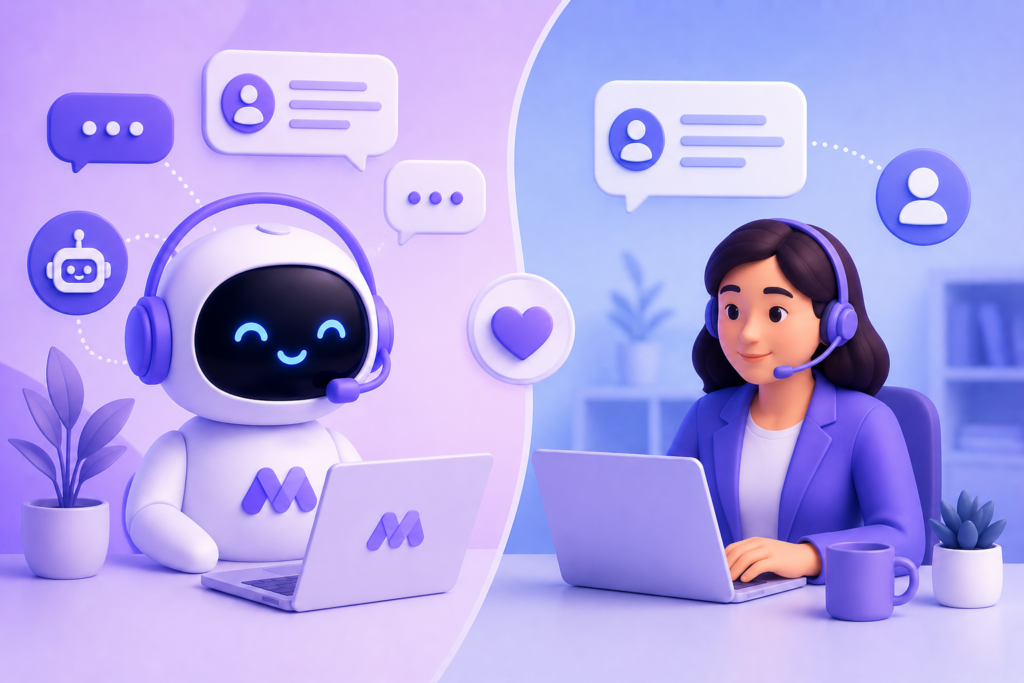
Many businesses think about AI chatbots and human support as if they are competing options. Should the business automate customer replies, or should it rely on people? Should AI answer inquiries, or should every message go to a staff member? Will automation make customer service feel cold? These are fair questions, especially for businesses that care about customer experience. But the better question is not whether AI should replace human support. It should not. The better question is which conversations can be handled faster through automation and which conversations still need a person. That distinction matters because not every customer message needs the same level of attention. Some customers simply want to know store hours, product availability, service inclusions, booking steps, delivery options, or payment methods. Others need help with custom requests, complaints, legal questions, quotations, negotiations, or more sensitive concerns. An AI chat agent like Mindy helps businesses manage that balance. Mindy can answer repetitive inquiries, collect customer details, qualify leads, support routine workflows, and escalate conversations to human representatives when needed. The goal is not to remove people from customer support. It is to help human teams spend less time on repetitive questions and more time on conversations that need judgment, empathy, and care. The Real Question Is Not AI or People For growing businesses, customer support often becomes difficult because every message goes through the same manual process. A simple question about delivery may sit beside a serious complaint. A basic inquiry about store hours may compete with a purchase-ready customer asking for a quotation. A team member may spend time answering repeated FAQs while a high-value lead waits. That is not always the best use of human time. AI chatbots are useful when the question is clear, repetitive, and information-based. Human support is better when the conversation needs flexibility, emotion, decision-making, or deeper understanding. The strongest customer response system uses both. AI Chatbots Are Best for Fast, Repetitive Questions AI chatbots are especially helpful when customers keep asking the same questions. These may include: Is this available? How much is it? What are your store hours? Do you deliver? How do I book? What are your payment options? Is this promo still ongoing? Can I request a quotation? These questions matter because customers often ask them before buying, booking, or taking the next step. However, they do not always require a staff member to type a fresh reply every time. Mindy can answer these repetitive inquiries using approved company information. It can learn from FAQs, product information, service details, company policies, website content, PDFs, Word documents, spreadsheets, and knowledge base documents. This helps customers get faster answers while reducing the amount of repetitive work handled by the team. Human Support Is Best for Judgment and Empathy There are still many situations where a person should be involved. Customers may need reassurance, negotiation, special approval, or emotional sensitivity. They may have a complaint, a unique requirement, a legal or contractual question, or a concern that cannot be answered by a standard response. Human support matters in moments where the business needs to listen carefully and respond with judgment. This is why Mindy includes human escalation. It can handle routine questions first, then transfer or escalate the conversation when a human representative is needed. That handoff is important because automation should not trap customers in conversations that need human care. Where Mindy Helps Before Human Support Steps In Mindy is useful because it can support the early and repetitive parts of customer conversations before a staff member needs to get involved. This makes support faster without making it less human. Mindy Provides Instant First Responses Customers often message a business while their interest is fresh. They may have just seen a product, clicked an ad, viewed a service page, or decided to ask about booking. If they wait too long, that interest may cool down. Mindy can provide instant replies to common questions, helping customers receive useful information right away. It also supports 24/7 text-based conversations, so businesses can respond even after office hours, during weekends, or while the team is busy. Mindy currently supports Facebook Messenger, Instagram, WhatsApp, Zinio, and Lazada. Website chat integration is also available as an add-on. For businesses that receive customer messages through multiple channels, this helps create a faster first layer of response. Mindy Collects Customer Details Some conversations need human follow-up, but the team still needs basic information first. For example, a quotation request may require the customer’s requirements. A demo request may need a preferred schedule. A service inquiry may need contact details, company information, or platform needs. Mindy can collect customer details during the conversation, such as full name, company name, email address, mobile number, industry, monthly chat volume, preferred platform, preferred demo date and time, or integration requirements. This helps the human team continue the conversation with better context. Instead of starting from zero, staff can review the information Mindy already collected and respond more efficiently. Mindy Qualifies Leads Not every inquiry is equally ready for follow-up. Some customers are just browsing. Some are comparing options. Some are ready to request a proposal, book an appointment, schedule a demo, or make a purchase. Mindy can qualify leads based on rules defined by the business. It can ask relevant questions and help identify which customers may need priority attention. This is useful for teams that receive many inquiries but cannot manually sort through all of them right away. Lead qualification also helps human support become more focused. When staff step in, they already have a clearer idea of what the customer needs and whether the inquiry is ready for the next step. Mindy Supports Routine Business Actions Some customer conversations do not end with a question. They lead to an action. A customer may want to book an appointment. A prospect may ask for a quotation. An ecommerce customer may need order-related support. A team may need information submitted to a connected system. Mindy can support appointment scheduling,
How to Reduce Repetitive Customer Questions Without Losing the Human Touch
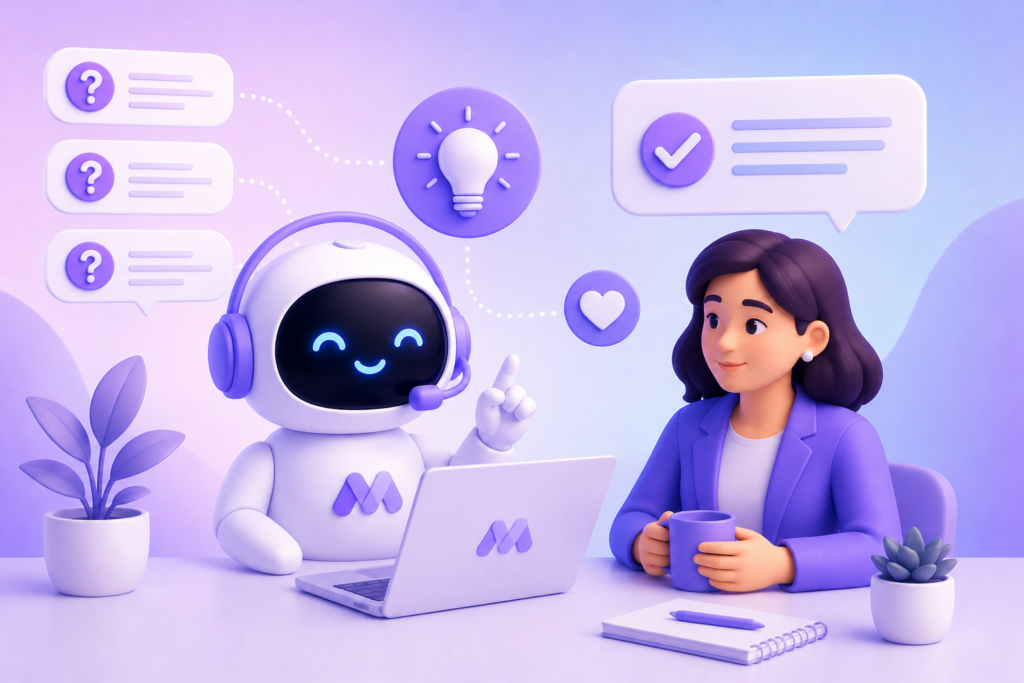
Repetitive customer questions are not a bad sign. Most of the time, they mean people are interested. They want to know if a product is available, how much a service costs, where the business is located, how to book, or what happens next. These are normal questions customers ask before buying, booking, visiting, or requesting a quotation. The problem begins when the team has to answer the same questions manually every day. One or two repeated questions may not feel like a major issue. But when they come in across Facebook Messenger, Instagram, WhatsApp, Lazada, Zinio, or website chat, they can quickly take time away from sales, operations, fulfillment, appointments, and more complex customer concerns. Still, many businesses hesitate to automate these conversations because they worry customer support will start to feel cold or robotic. That concern is fair. Customers do not want to feel ignored by a machine. They want clear answers, helpful guidance, and access to real people when the situation needs it. The goal is not to remove the human touch. The goal is to use automation where it makes sense so human teams can focus on the conversations that truly need them. That is where Mindy by Optimind can help. Mindy is an AI chat agent that can answer repetitive inquiries, use approved company information, collect customer details, qualify leads, support bookings, and escalate conversations to human representatives when needed. A Better Workflow for Repetitive Customer Questions Reducing repetitive questions starts with understanding what customers ask and where human support is most valuable. A business does not need to automate every conversation at once. It can begin with the questions that are asked most often, then create a response system that keeps customers informed while keeping people available for more sensitive or complex needs. Step 1: Identify the Questions Your Team Answers Every Day Before automating anything, the business should look at the questions that come up repeatedly. These may include: Is this available? How much is it? What are your business hours? Do you deliver? How do I book? Can I request a quotation? What are your payment options? Where are you located? Is this promo still available? These are usually the best questions to automate first because they are common, predictable, and based on information the business already has. They are also valuable questions. A customer asking about availability, pricing, or booking is often trying to decide whether to move forward. If the answer comes quickly, the conversation can continue. If the reply takes too long, that interest may fade. Mindy helps by answering these common inquiries instantly using information approved by the business. This gives customers a faster first response and reduces the amount of time staff spend typing the same answers throughout the day. Step 2: Prepare Approved Answers Before Automating Good automation should not be based on guesswork. If a customer asks about products, services, policies, or bookings, the response should match what the business actually offers. That is why businesses need clear and approved information before using an AI chat agent. This may include FAQs, product catalogs, service details, business hours, delivery guidelines, booking instructions, company policies, pricing guides, website content, and knowledge base documents. Mindy can learn from approved sources such as FAQs, product information, service information, websites, PDFs, Word documents, spreadsheets, and knowledge bases. This feature matters because customers need accurate answers. A helpful AI chat agent should not simply sound confident. It should be trained on the right business information. When the information is clear, Mindy can answer repetitive questions in a way that stays aligned with the company’s actual products, services, policies, and customer process. Step 3: Use Mindy to Answer Simple Questions Instantly Once the business has prepared its approved information, Mindy can start handling simple and repetitive questions. For example, if a customer asks about store hours, Mindy can provide the answer. If someone asks about product availability, service details, or booking instructions, Mindy can respond using the information it has been trained on. This helps customers get answers faster, especially when the team is busy or offline. Mindy supports 24/7 text-based conversations, which means it can continue assisting customers outside regular office hours. This is helpful for businesses that receive messages at night, on weekends, during holidays, or during campaign periods when inquiries increase. Mindy currently supports Facebook Messenger, Instagram, WhatsApp, Zinio, and Lazada. Website chat integration is also available as an add-on. This gives businesses a way to support customer conversations on the platforms customers already use, without requiring the team to manually monitor every message all the time. Step 4: Let Mindy Collect Customer Details Before Follow-Up Some questions are repetitive, but they still need more context before the team can respond properly. For example, a customer requesting a quotation may need to provide details about their requirements. A prospect asking for a demo may need to share a preferred schedule. A service inquiry may require information about the customer’s industry, location, or needs. Mindy can collect these details during the conversation. Depending on the inquiry, Mindy can gather information such as full name, company name, email address, mobile number, industry, monthly chat volume, preferred platform, preferred demo date and time, or integration requirements. This makes follow-up easier for the team. Instead of asking for the same basic details manually, the business can receive a more complete inquiry before a human representative steps in. It also improves the customer experience because the conversation feels more organized. Customers do not have to repeat themselves as much, and the team can continue the conversation with better context. Step 5: Use Lead Qualification for Sales-Related Questions Some repetitive questions are not only support questions. They are sales opportunities. A customer asking about price, availability, service coverage, demo schedules, or quotation requirements may be moving closer to a decision. The challenge is knowing which inquiries are casual and which ones need priority follow-up. Mindy can help qualify leads based on rules defined by the